International Child Abduction
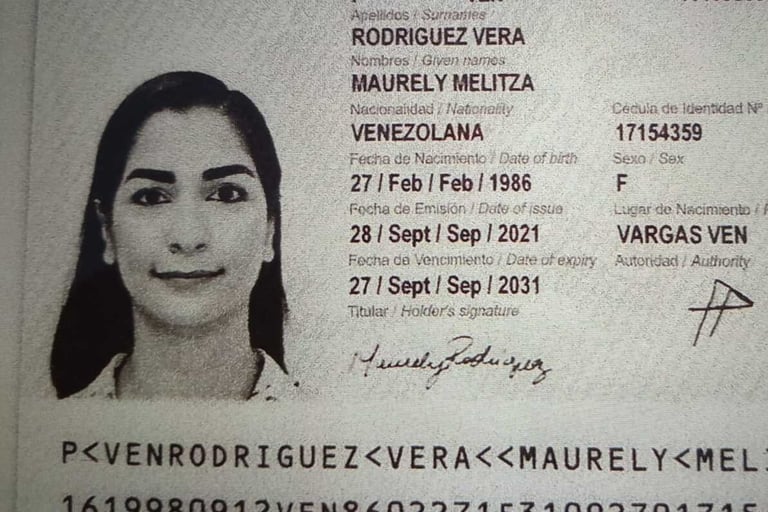
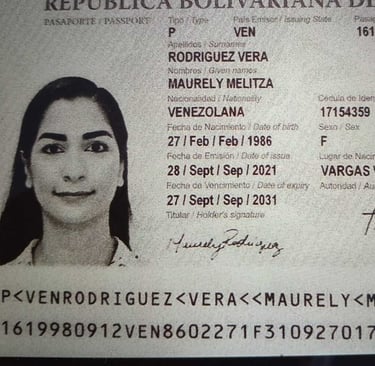
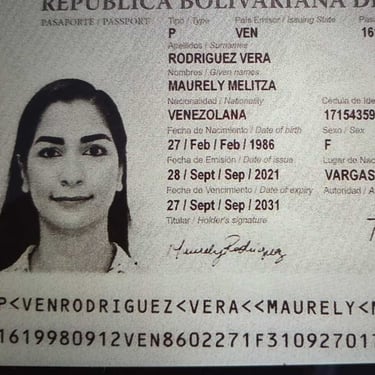
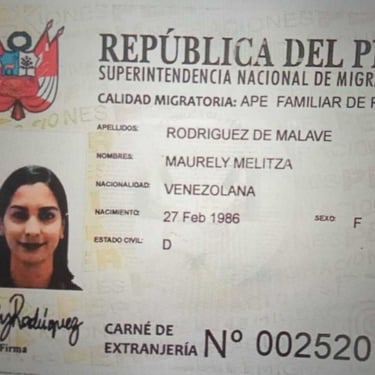
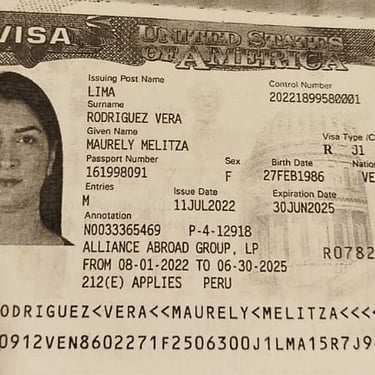
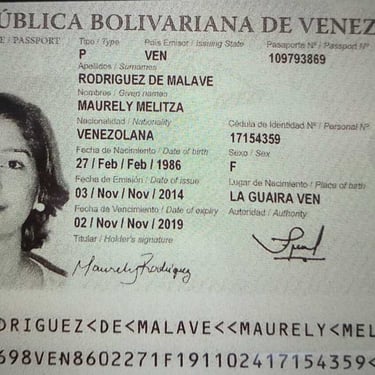
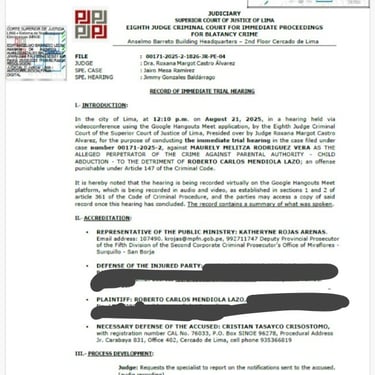
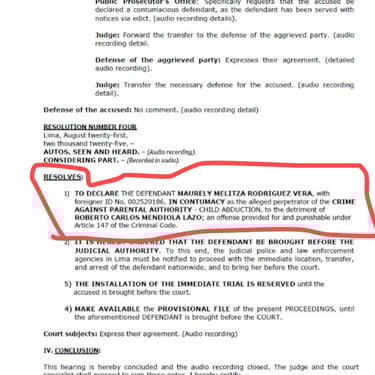
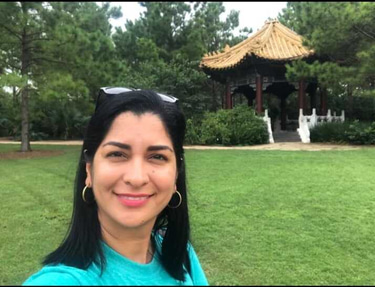
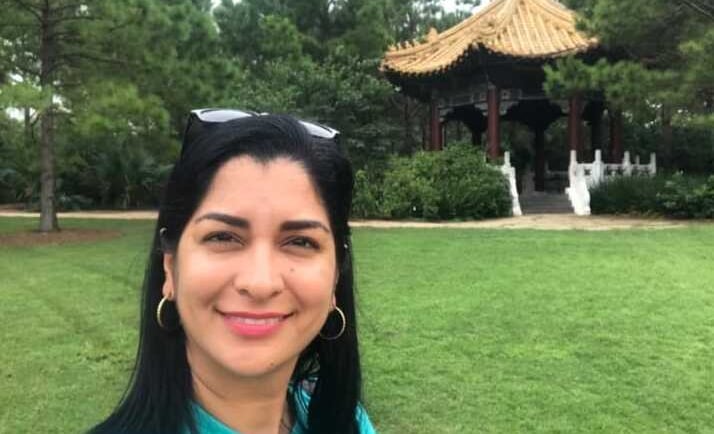
Abdution of Gabriel by her mother Venezuelan Maurely Rodriguez Vera who is currently a teacher at Seguin Elementary School in Houston TX before at Noel Elementary School of Odessa Texas. She took the child to the United States without the father’s authorization. In Peru, she is a convicted criminal wanted by the authorities.
3/3/20266 min read
A Father’s Pain and a Mother’s Selfish Decision
Gabriel (5) had a simple and happy life in Lima. He went to school, had his doctors, his routine, his bedroom, his toys. He had his dad, who lovingly called himself “papatitus.” He also shared his daily life with his grandmother, “Nona Chaby,” and his nanny Rita — his closest family circle in Peru.
Gabriel’s mother, Maurely M. Rodriguez Vera (44), a Venezuelan national, had moved to the United States by her own decision to work as a teacher at a school in Odessa, Texas and started a new life and relationship with a Venezuelan boyfriend.
From the day he was born, Gabriel’s world was in Peru. His home was in Lima. That is where he grew up, where he learned to speak, where he celebrated his birthdays.
For two full years, his Peruvian father “papatitus” exercised daily custody. He took him to school (they walked hand in hand), accompanied him to activities (capoeira, swimming, theater, among others), and was present in every detail of his upbringing. Their father-son relationship was close, constant, and deeply affectionate. Of course, like in many families, there were moments when “papatitus” had to be firm to guide his son properly — something that happens in parenting and is part of raising a child with love and responsibility.
In July 2024, what appeared to be vacation time within Peru turned into an abrupt separation.
Gabriel’s mother had returned to Peru, as she had done two or three times a year since moving to the U.S., to spend time with him and travel together. However, according to the father, the situation unfolded differently than expected, Maurely Rodriguez Vera had a dark side plan.
Without the father’s authorization, Gabriel left Peru. Later information indicated that he crossed through neighboring countries before eventually traveling to the United States. Because Peruvian law requires a notarized biometric travel authorization when one parent travels internationally with a minor, no such authorization had been granted.
Ms. Maurely M. Rodriguez Vera endangered Gabriel's safety by taking him out of Peru via back roads and trails, crossing the borders of Ecuador and Colombia, from where she then traveled to the United States. It was logical that she could not leave with the child through Lima's Jorge Chavez International Airport because every time a parent travels abroad with their minor child, they must present a notarized Travel Authorization with a biometric signature, which Ms. Maurely M. Rodriguez Vera did not have. Like many other Venezuelans who arrived in Peru, she resorted to using clandestine routes to cross borders between countries.
After months of repeated calls and emails asking about Gabriel’s whereabouts, Maurely M. Rodriguez Vera did not respond. More than 50 emails were sent. Phone calls were blocked.
The Peruvian father began his own search — contacting police, attorneys in Peru, Venezuela, and the United States. After an emotionally and financially exhausting effort, he learned that on August 6, 2024, Gabriel had entered the United States.
Nearly four months had passed since father and son had last seen or spoken to each other. It was devastating. Since then, contact has remained restricted. There were no phone calls. No video calls.
No updates. A father spent months without hearing his son’s voice.
Nearly a year and a half of uncertainty. Lawyers. International legal filings. Sleepless nights. Unanswered questions. Silent tears.
This is not only about the financial cost of legal proceedings in Peru, Venezuela, and the United States. It is about the emotional cost of not knowing how your child is doing. Not being able to hug him. Not being able to say goodnight.
The Hague Convention exists precisely for situations like this — when a child is taken outside their country of habitual residence without the consent of the other parent. Peru and the United States are both signatories to that treaty. That is why there is currently a judicial proceeding in Texas seeking Gabriel’s return to his home country.
Beyond the courts, this is the story of a child separated from his environment — and a father who continues fighting to be reunited with him.
Documented Facts
• Gabriel was born in Lima, Peru, in March 2019.
• His habitual residence has always been Peru.
• Between July 2022 and July 2024, his father exercised daily custody.
• On July 22, 2024, Gabriel was released for vacation time within Peru.
• No verbal or written authorization was given for him to leave the country.
• On August 6, 2024, mother and child entered the United States.
• On August 15, 2024, the father was informed that Gabriel would not be returning, without further details about the child’s situation.
• Since August 2024, there has been no contact.
• In March 2025, a Family Court in Lima denied the request to change Gabriel’s residence abroad.
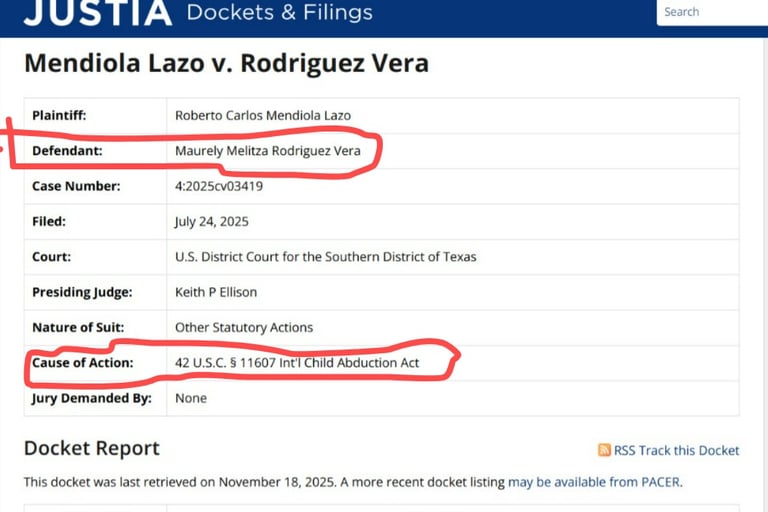
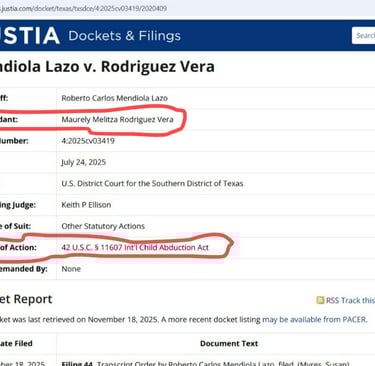
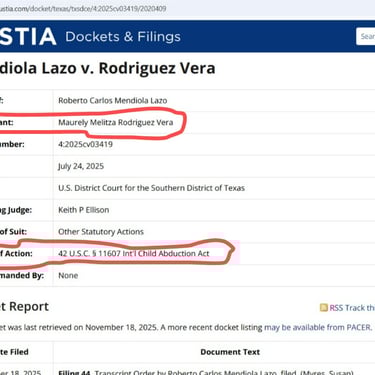
• There is currently a pending case against Mrs. Maurely Rodriguez Vera in the United States District Court for the Western District of Texas seeking the child’s return under the Hague Convention (Case No. 4:2025cv03419), related to an alleged international parental child abduction.
These are documented facts within an ongoing judicial proceeding.
Testimony from the Father
“I never imagined that the hardest part of my life would be not being able to hear my son’s voice. I was present from the day he was born. I cared for him, took him to school, supported his routines. Our life was simple but happy. Gabriel knew his papatitus was always there.
When I was told he would not return, I felt like my world collapsed — because he is my world and the air I breathe.
I have hired five lawyers in three countries and one private investigator. I have spent resources I never imagined I would need to spend. But the hardest part is not the money. It is the silence. Not knowing if he is okay. Not being able to tell him I love him.
I am not fighting out of pride. I am fighting for my son — for his right to maintain a relationship with his father and to return to his environment, his school, and his life in Lima.
As a father, I worry constantly about his stability, his legal situation, and his well-being in a foreign country. No child should have to live in uncertainty when he has a safe and loving home waiting for him.
Seven-year-old Gabriel now has no legal status in the United States. He doesn't even have health insurance or any document that legally establishes his presence in the U.S., and now, with ICE pursuing a harsh policy against undocumented immigrants under President Donald Trump, it causes immense anguish for a parent. His safety is at risk solely due to the whims and selfishness of his mother, Maurely M. Rodriguez Vera, and her entire maternal family: her brother Manuel, her sister-in-law Kimberly, and his grandmother Hilda Vera, who are covering for her and were complicit in this abduction.
Gabriel should not have to grow up away from the place where he was free and happy.
I would not wish this pain on any parent.”
When a Relationship Conflict Becomes an International Conflict
International parental child abduction occurs when one parent removes or retains a child outside their country of habitual residence without the other parent’s consent or judicial authorization.
To address these cases, the Hague Convention on the Civil Aspects of International Child Abduction was created. Its purpose is not to decide final custody, but to determine the proper jurisdiction and restore the situation prior to the wrongful removal.
The impact on children can be profound:
• Sudden disruption of environment
• Loss of contact with one parent
• Interruption of school and social routines
• Emotional confusion
The impact on the left-behind parent can be devastating: uncertainty, financial and psychological strain, complex cross-border litigation.
Prevention is key:
• Always document travel authorizations.
• Formalize custody arrangements.
• Seek judicial solutions before making unilateral decisions.
The priority must always be the child’s well-being.
Open Letter
To those facing a custody dispute:
Before making a decision that involves relocating a child to another country, seek legal advice. Acting unilaterally can trigger serious international consequences and complex judicial proceedings.
The forced separation of a child from one parent leaves deep emotional scars. Children are not responsible for adult disagreements or for the end of a relationship. We must act with civility and responsibility.
International treaties exist to protect children and preserve family bonds.
May no child have to grow up far from one of their parents because of rushed or unilateral decisions.
Finally, to those men or women who are considering starting a relationship with someone: take the time to truly understand her/his past. Learn about her/his background. Get to know her family IS VERY IMPORTANT.
Do not make the mistake I made — opening the doors of your home and placing your full trust in someone simply because you wanted to help. When she arrived in Peru, she had only a bag, no job, and no food. Knowing her situation moved me, and I chose to help.
I never expected things to unfold the way they did. It was painful to discover that the trust I gave so freely would later be broken. I later discovered that she was already married when she arrived in Peru and at the time she gave birth to the child!
However, I have a clear conscience. I acted according to my values. I did what any decent person with compassion would do for someone in need.
I do not hold hatred or resentment. I only want justice for my son, and I seek to raise awareness in society about this situation.